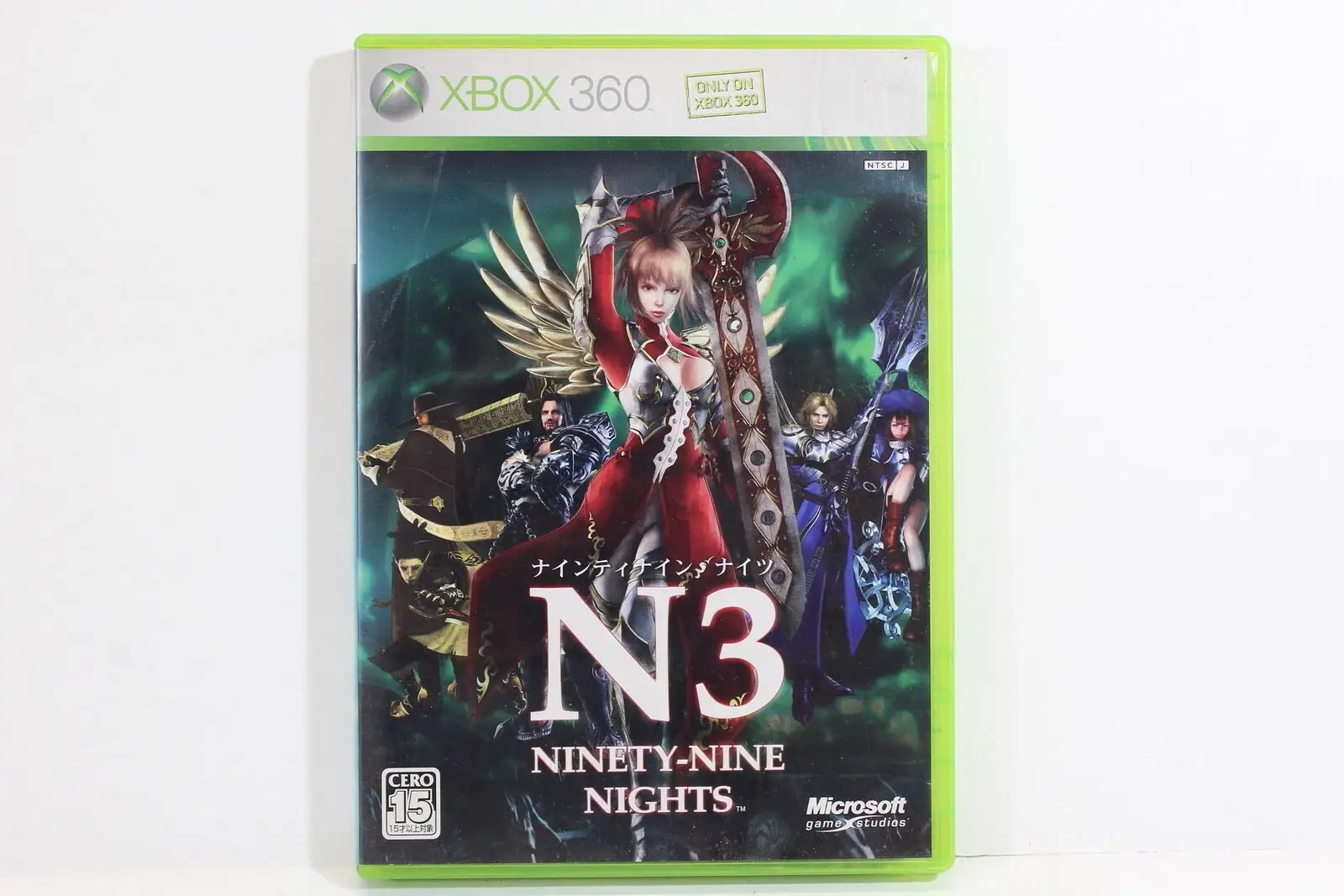
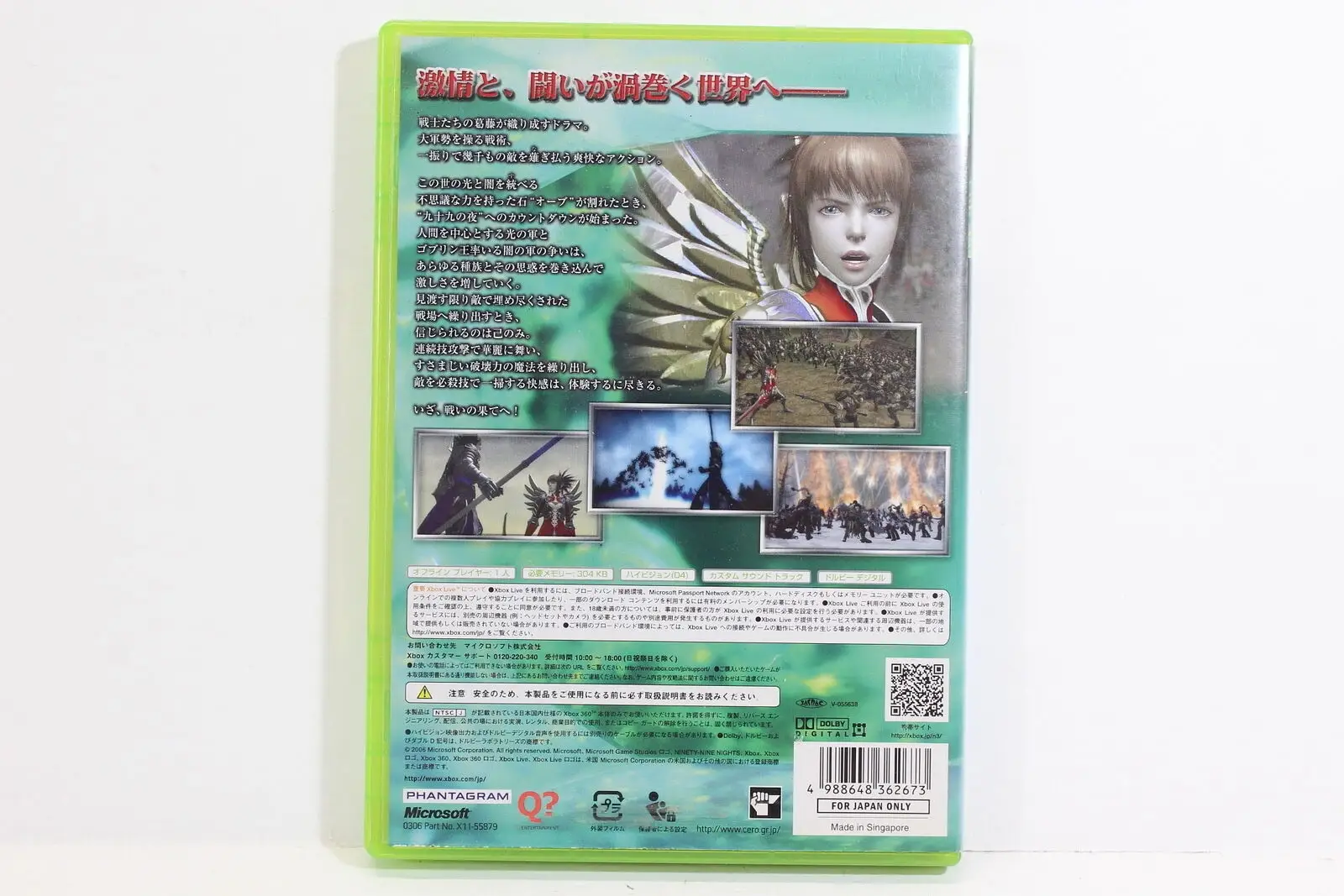
This game is of the crowd combat subgenre, in which players battle hundreds of foes simultaneously. Combo moves are performed by using various combinations of the two main attack buttons, while the jump and dash buttons can initiate other actions or specialty attacks. Individual enemies are generally quite weak, typically being unable to perform any combos or block with any effectiveness.
There are seven different characters with different play styles, although only one character, Inphyy, is unlocked at the beginning. Successfully completing each character's story will unlock one or two new characters, until they have all been revealed.
After completing levels in Ninety-Nine Nights, a player's performance is scored, with both a letter grade and 'points' being awarded, depending on how well the player did. Points can be spent to unlock extras, such as concept art and character bios.
The title has limited role-playing elements, with characters gaining levels and being able to select which weapons and accessories to equip. These performance-enhancing items can be found in the different stages or are awarded for excellent performance, providing benefits such as increased attack power. As the characters gain levels they learn additional attack combinations, but there is no opportunity for skill customization.
Another key component of the title is the “Orb Attack” / “Orb Spark” element. Killing enemies yields red orbs that are stored up until the “Orb Attack” bar is full. Once the bar is full, a player may press B to enter “Orb Attack” mode, where the character can use powerful attacks to slay groups of enemies. Enemies killed while in this mode drop blue, not red, orbs. Once a player has stored up enough blue orbs (which usually require several “Orb Attacks”), he or she can unleash a super-devastating, screen-clearing “Orb Spark” attack. Killing enemies yields the occasional equipment drop, which you can equip any time during a map as long as you are not retaliating from an attack, in midair, or in the middle of an attack.
The orb collection mechanic is not unlike that found in Onimusha: Warlords except that it is automatic. The orb attacks are comparable to “Musou attacks” in the Dynasty Warriors series, in that the player is invulnerable while making them, although in Ninety-Nine Nights, such attacks are significantly more powerful. Each character has their own unique attacks, weapons and orb attacks, as well having their own questline (of around four stages on average).
The gameplay differs somewhat from previous games in this genre as enemy soldiers put up virtually no resistance. Players will routinely mow down thousands of such troops per level using various attack combinations. The Orb attacks effectively act as “nuke buttons”, destroying vast formations of enemy soldiers, with only boss characters and some formation leaders unaffected. Each level takes the form of a series of smaller battles which are often interspersed with cutscenes. Although there are usually several objectives during a level, progress through levels and the game is mostly linear. In a stark contrast to the cannon fodder foes, the boss characters are typically quite challenging and can inflict massive amounts of damage in a short period of time.
Source: TheGamesDB
Specification: Ninety-Nine Nights
|
Videos: Ninety-Nine Nights



There are no reviews yet.